Related arts
Baguazhang (pa-kua chang): walking the circle
Watch a baguazhang player for a minute and you will see someone walking a circle, turning, coiling and suddenly changing direction, hands held out towards an imaginary centre. It is one of the most distinctive sights in the Chinese martial arts, and a natural companion to t'ai chi.
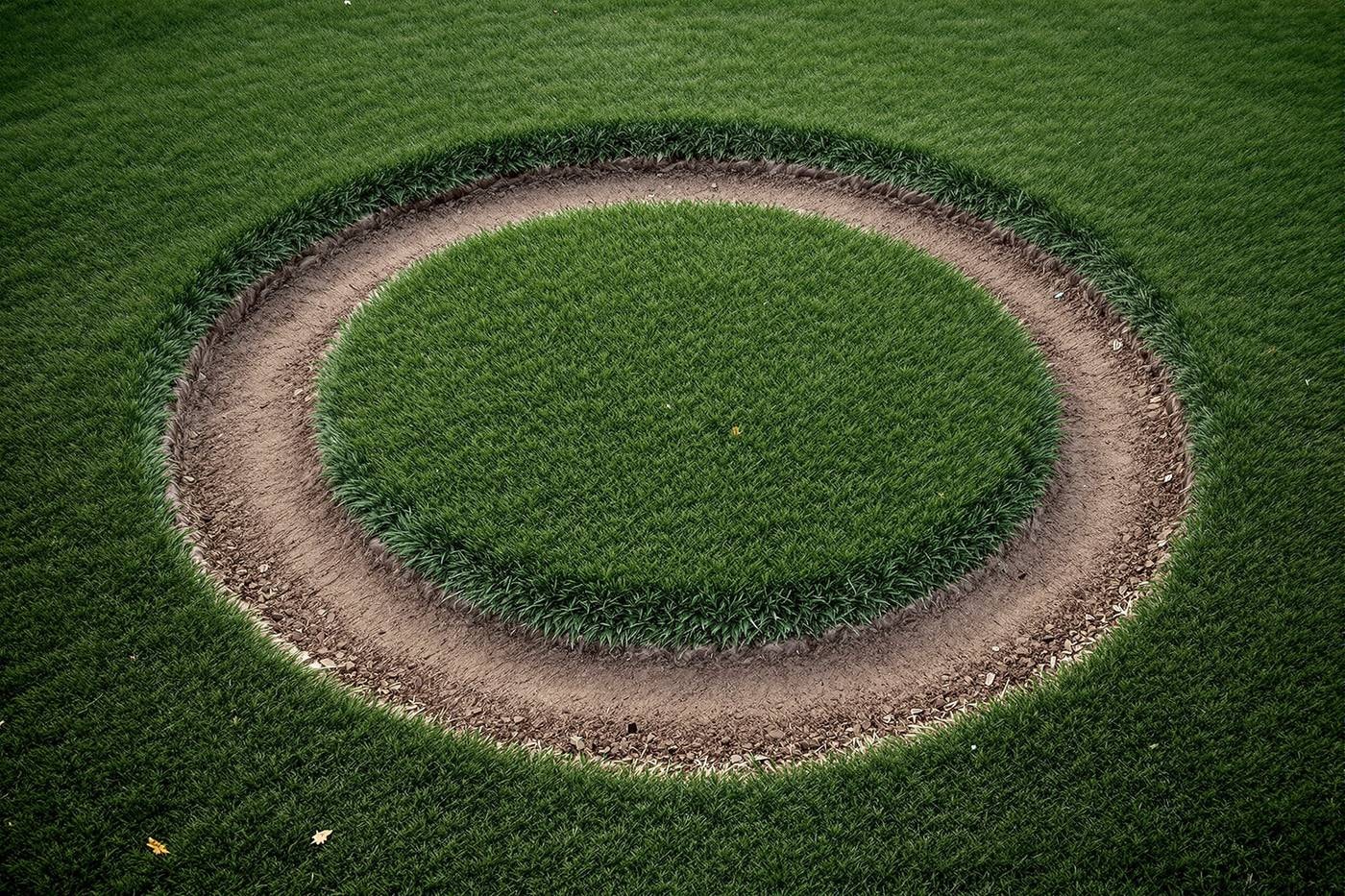
The eight trigram palm
The name means "eight trigram palm". Wikipedia's article on baguazhang explains that it refers to the trigrams of the Yijing, one of the canons of Daoism, and describes the art as one of the three main martial arts of the Wudang school, the others being tai chi and xingyiquan. Like them, it is grouped among the internal arts, the neijia.
Dong Haichuan and the art's spread
The same article attributes the creation of baguazhang as a formal martial art to Dong Haichuan, who is said to have learned it from Taoist and Buddhist masters in the mountains of rural China. It adds that many Chinese authorities reject the Buddhist part of that story, and that there is evidence the art was a synthesis of martial arts already practised in Dong's region, combined with Taoist circle walking. Dong's skill, the article says, earned him a place as an instructor and bodyguard at the imperial court.
His students went on to teach in their own ways. The article describes how their methods of training and their palm techniques differed, giving rise to recognisable family styles, and notes that most practitioners today follow one or another of the major branches. That pattern will be familiar to anyone who has read about the t'ai chi families: a founder, a generation of distinctive students, and branches that share principles but look quite different.
Circle walking
The heart of the art is walking the circle. The Wikipedia article calls it baguazhang's characteristic method of stance and movement training, sometimes known as "turning the circle", and notes that all branches use it. The practitioner walks around a circle, often with the body turned in towards its centre and the arms held in fixed positions, keeping the knees bent and the steps smooth and level.
Beginners are often surprised how demanding this is. Walking slowly in a low, even posture while keeping the upper body still and turned asks a great deal of the legs and of concentration. Teachers usually start students with higher stances, larger circles and short sessions in each direction. Anyone with sensitive knees should read knees, joints and a lifetime of practice and adjust accordingly.
Palm changes
From the walking, the practitioner changes direction through a set of turning, coiling movements called palm changes, then walks the other way. The simplest is often called the single palm change; more elaborate changes follow. Through them the art trains turning from the waist, stepping that hooks and splays the feet, and a body that can wrap around an opponent rather than meet them head-on.
How it relates to t'ai chi
Bagua and t'ai chi share an emphasis on relaxation, whole-body movement and yielding to force, and many teachers train both. The contrast is also instructive. T'ai chi tends to root and redirect; bagua tends to move around and change angle. T'ai chi's movements are often described as arcs within a stable frame; bagua makes the frame itself travel. Wikipedia's article on neijia notes that the grouping of tai chi, xingyiquan and baguazhang as the internal arts owes much to the writings of Sun Lutang, who was himself expert in all three.
Reading a lineage chart
Lineage charts, drawn as family trees from a founder down to present teachers, are common in bagua schools. They are useful but easy to misread.
- A line on a chart is a claim, not a certificate. It says who a teacher considers their teachers to be.
- Charts simplify. Many practitioners studied with several teachers, and most charts show only the connection a school wants to emphasise.
- Short lines are not always better. Few generations back to a famous name may reflect long lives, not superior skill.
- Look at the students, not just the chart. The best evidence of a lineage is what its current students can actually do.
Kuo Lien-ying, whose place in Yang-style history is described on the page on Kuang Ping Yang style, is one of many teachers whose training crossed several internal arts; Wikipedia's article on Kuo Lien-ying records that he also studied xingyiquan. For the third internal art, read xingyiquan.