Weapons
Weapons and specialty training
Beyond the solo form, a traditional t'ai chi curriculum opens into a whole range of specialty training: long and short weapons, everyday objects used as weapons, breathing practices and partner work. These are often taught in focused workshops rather than regular weekly classes.
Why weapons follow the empty-hand form
A weapon is an extension of the body. Every movement of a staff, spear or sword starts in the feet, passes through the legs and waist and reaches the hands; the weapon only makes the result longer and more visible. Without a sound empty-hand foundation, a weapon simply exaggerates faults. That is why most teachers ask students to be secure in the solo form before starting weapons, and why weapon training so often improves the hand form in return.
The weapons of the Chinese martial arts have a long history of their own. Wikipedia's article on the jian describes the straight sword as one of four foremost weapons alongside the staff, the spear and the sabre, and its article on the dao names the same four as the traditional weapons. In t'ai chi the sword and sabre have pages of their own in this guide: the jian and the dao.
The staff
The staff is usually a plain wooden pole, roughly as tall as the practitioner or a little more. It teaches two-handed coordination, sliding grips and large circles driven from the waist. Because both ends are used, it demands awareness all around the body. Staff forms are an excellent test of whether the hips and shoulders are moving together.
The spear
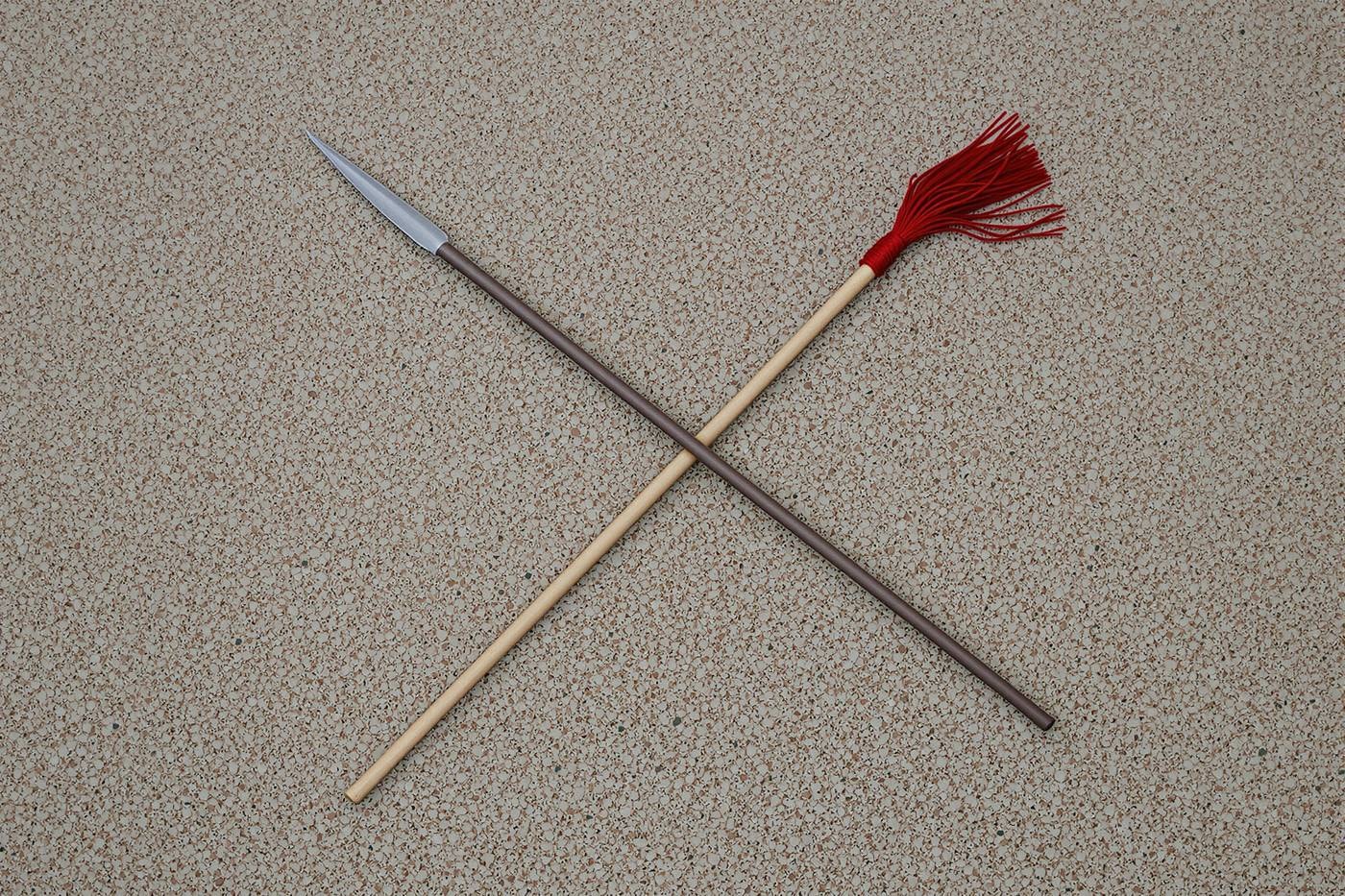
The spear is longer and more demanding. Its characteristic movements, small circles at the tip and sudden thrusts along a straight line, depend on a stable stance and precise alignment of the back hand, front hand and point. Many teachers consider the spear the most difficult of the long weapons. Wikipedia's article on Chinese martial arts describes the basic theory of weapons training as treating the weapon as an extension of the body, with training moving from solo forms to forms with partners and then to applications.
The walking stick
A walking stick form uses a cane or stick of everyday length. It combines the reach of a short staff with the hooking and trapping possibilities of a crooked handle. It is a practical art, since a stick is something a person might reasonably carry, and many students find it an approachable first weapon because its movements are compact and its length forgiving.
The fan
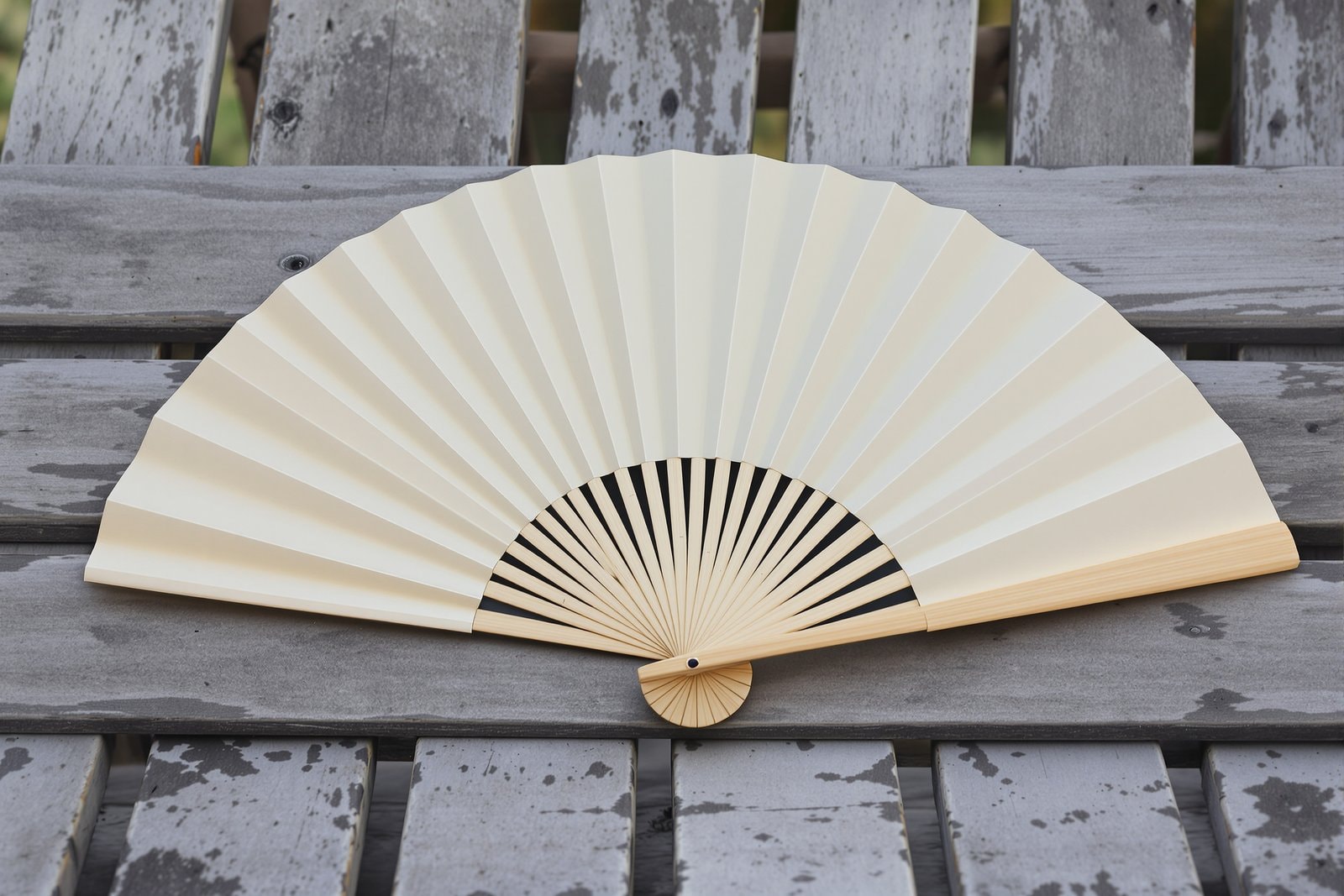
Fan forms use a sturdy folding fan, opened and closed with a snap as part of the movement. The fan is light, but using it well requires fine control of the wrist and fingers and good timing between the opening and closing and the body's movement. Fan forms are graceful to watch, and they carry the same principles as the sword: the whole body moves the small object.
Qigong and pushing-hands workshops
Specialty workshops are not only about weapons. Many schools hold sessions devoted to qigong, the standing and moving breathing exercises described on the qigong page, or to intensive pushing hands, where students rotate through many partners over a day. A workshop format allows a single subject to be studied more deeply than a weekly class can manage, and it is a good way to meet students from other groups.
Safety with training weapons
- Start with wood or other blunt training versions. Metal comes later, if at all.
- Check your equipment. Look for splits in wooden weapons, loose fittings in metal ones and worn tassels that might catch.
- Check your space. Long weapons need room overhead and on every side. Count the arcs a form makes before you begin.
- Keep your distance. Leave far more space between students than seems necessary.
- Never point a weapon at anyone outside a supervised partner drill.
- Choose sensible weights. A weapon that is too heavy spoils posture and strains the wrist and shoulder.
- Transport weapons discreetly and in a bag, and learn the local rules about carrying them in public.
Weapons forms can also include deeper stances and longer steps than the hand form. If your knees are sensitive, keep the stances higher and read knees, joints and a lifetime of practice.